Did you know that you can use semi-fictional characters that portray an individual or group of users to improve the design, development and accessibility of your agency’s electronic information or digital service?
These semi-fictional characters, called personas, are primarily used in the research and design phase of a project to ensure that the user experience — including equivalent access to information for people with disabilities — is considered for a service, product, or website.
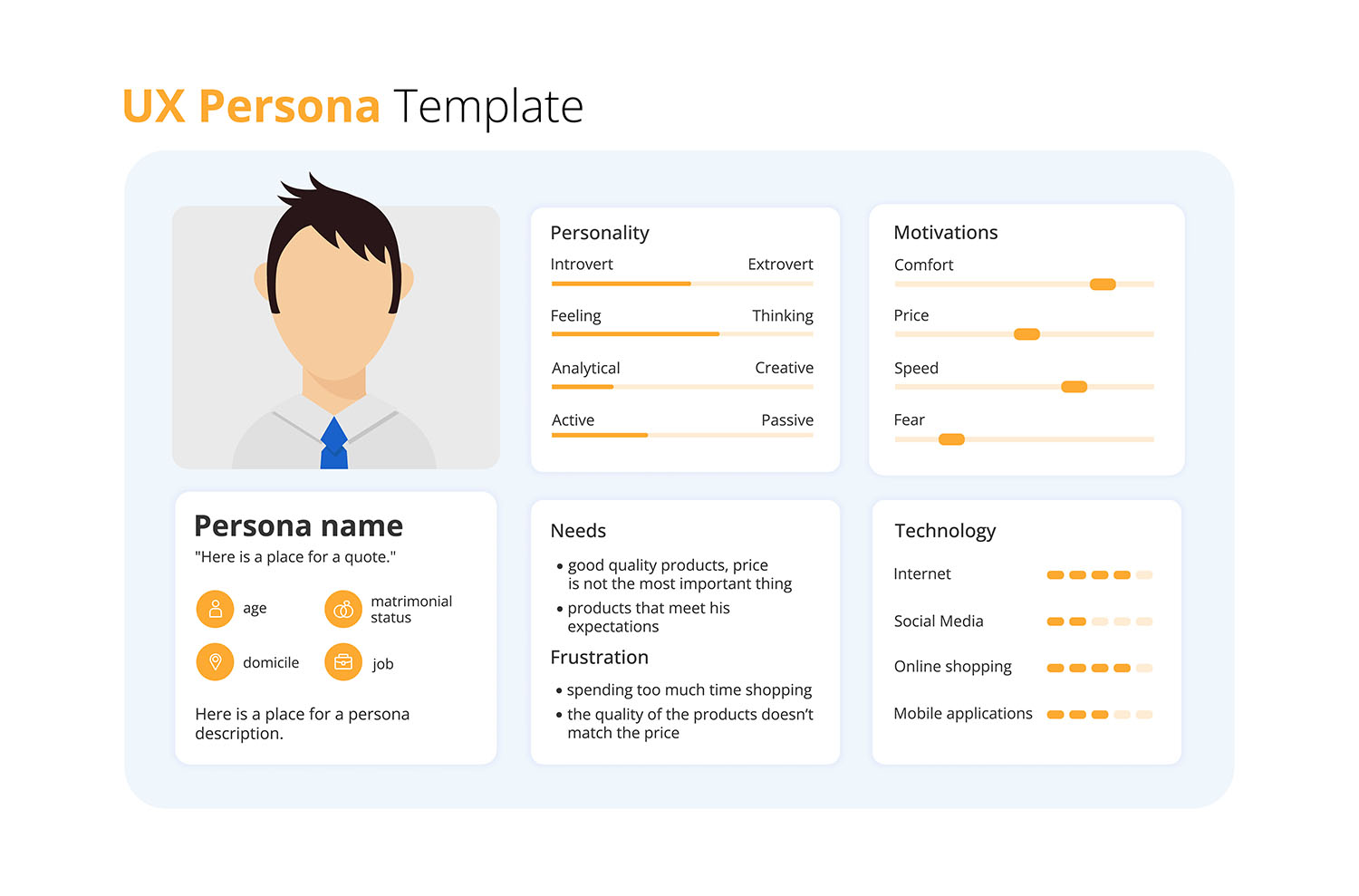
-
 Name: Enzo
Age: 40
Occupation: Program Analyst at a federal agency
Location: Billings, Montana
Disability: Blind since birth
Assistive Technology: Enzo uses a screen reader and Braille display.
Home life: Married with four children still at home
Goals: Complete forms, understand the information being presented, understand summary reports.
Frustrations: Unable to determine what information is being asked by a form, difficulty reading charts due to missing labels, images that do not have description, things are out of order when navigating with a screen reader.
Quote: “If it's not properly labeled, I can only make a best guess as to what's on the screen.”
Design Considerations:- Ensure semantic HTML and ARIA labels for form fields.
- Provide Section 508 conformant data visualizations with text equivalents.
- Support keyboard and screen reader navigation.
Design Considerations
Using multiple, various personas helps uncover the different needs and expectations — called design considerations — of various user types by illustrating how individuals interact with content and assistive technologies.
Personas should also reflect attributes that align with functional performance criteria, based on how people use products and services to interact with technology. These criteria include:
- Without Vision
- Limited Vision
- Without Perception of Color
- Without Hearing
- Limited Hearing
- Without Speech
- Limited Manipulation
- Limited Reach and Strength
- Limited Language, Cognitive, and Learning Abilities
Development Considerations
Business analysts and other requirements officials should use persona-based design considerations to develop acceptance criteria for ICT accessibility-centered user stories, ensuring new products or features conform to accessibility standards — minimizing the need for costly remediation.
For more information on creating personas for accessible ICT—including sample personas for various disability types that you can use in your user stories—visit Sample Personas for Users With Disabilities.