This section examines responses in three specific factors of Policy Integration, Acquisition and Procurement, and Testing and Remediation. Taken with Accessibility Conformance, responses suggest that governance and implementation effectiveness, not agency size, drive accessibility outcomes. Agencies that more effectively integrate Section 508 into policy, acquisition, and testing processes tend to achieve better ICT conformance, while fragmented implementation corresponds with lower ICT conformance. The results highlight not only where implementation barriers persist, but also how differences in acquisition processes, testing methods, and remediation techniques impact outcomes across the federal enterprise.
Interpreting Implementation Outcomes
Implementation outcomes reflect agency and component perspectives regarding how well agencies integrate accessibility practices or how frequently they perform specific actions related to key tasks. While all 60 agencies responded to each set of questions, the number of component responses varied by question set.
Policy Integration
Key Takeaways
Assessment
The FY 2025 assessment examined the extent to which ICT accessibility is integrated into nine core business functions across agencies and components.
All 212 respondents, 60 agencies and 152 components, provided responses.
Findings
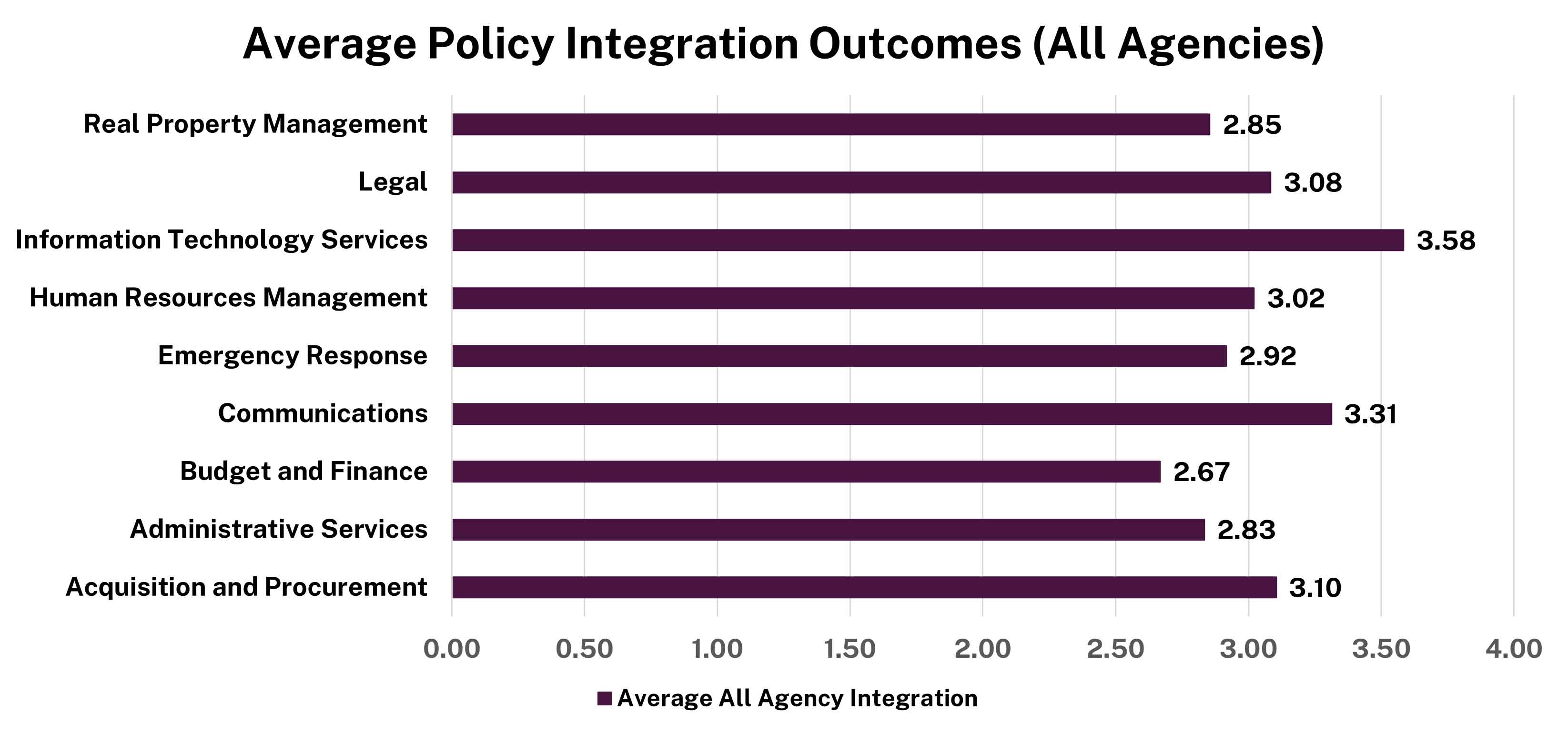
Integrating ICT accessibility into core agency and component functions supports more consistent Section 508 compliance. However, integration varied significantly by business functions (Figure 6).
Information Technology Services and Communications showed the highest levels of policy integration, while Emergency Response and Budget and Finance showed the lowest.
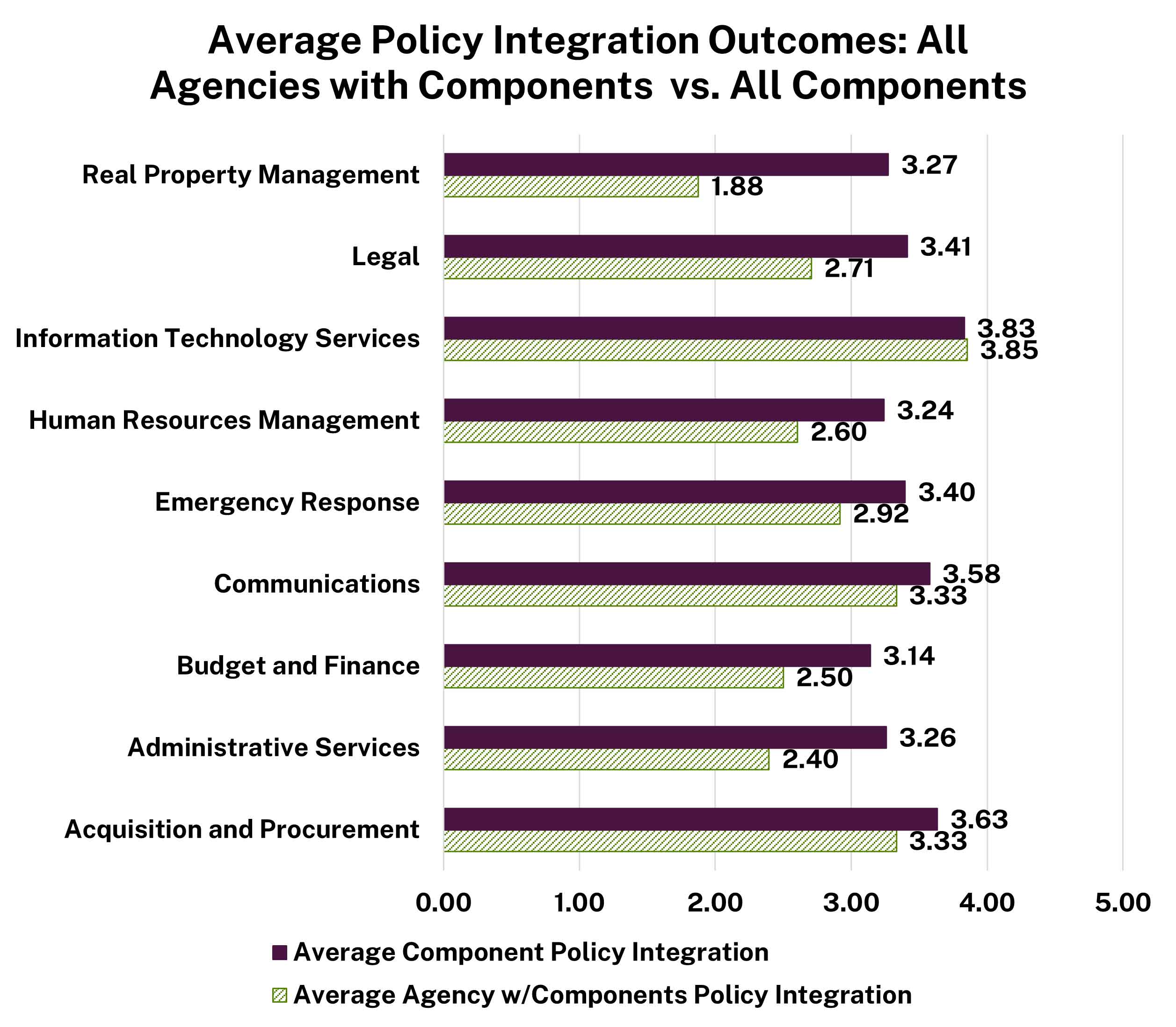
Comparisons between parent agencies and their components show broadly similar patterns, with components reporting slightly higher integration across most business functions (Figure 7).
The largest gaps between agency-level and component-level accessibility integration appear in Budget and Finance and Acquisition and Procurement, where components report stronger integration than parent agencies. This pattern suggests that accessibility integration often occurs where operational control over funding and purchasing decisions is strongest, while departmentwide governance and standardization remain underdeveloped. Stronger integration into enterprise-level acquisition and budget policies could improve consistency, reduce downstream remediation, and lower long-term costs.
Human Resources Management and IT Services showed the smallest agency-component gaps, suggesting more consistent integration, likely supported by enterprise-wide systems, shared services, or centralized policies.
Best Practices and Remaining Challenges
During the past year, only two agencies reported taking deliberate steps to review and update policies to better integrate Section 508 requirements across core business functions. These efforts required coordination with program offices, clarifying accessibility expectations, and strengthening collaboration across functional areas. Significant challenges remain due to fragmented policy structures and limited integration of Section 508 requirements into operational policies. Although many agencies maintain standalone Section 508 policies, related policies governing acquisition, IT, communications, and other core functions often do not fully integrate accessibility requirements. This fragmentation weakens enforcement, contributes to inconsistent implementation, and increases the risk of developing or procuring inaccessible ICT.
Reviewed/Updated: March 2026